
Labeling, Lot Tracking, and Traceability in the Research Supply Chain
Why a Number on a Vial Matters More Than It Looks
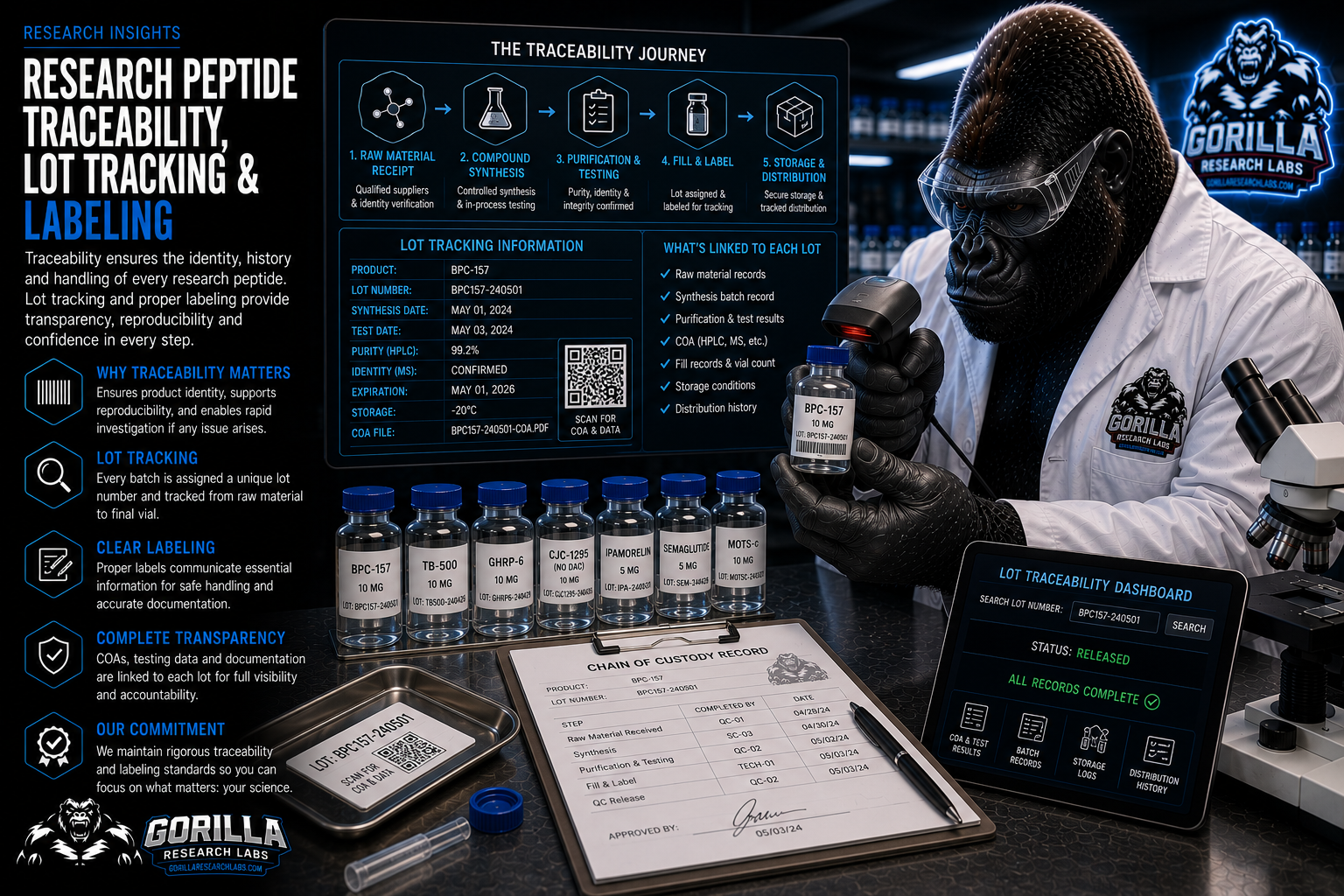
A single alphanumeric string printed on a label is easy to overlook. Yet that lot number is the thread that ties a research material back through every hand it passed on the way to the bench: the synthesis run, the purity testing, the packaging line, the storage conditions, and the shipment. In the research supply chain, research peptide traceability is not a bureaucratic nicety. It is the mechanism that lets a laboratory answer the most important question in any experiment: exactly what was this, and where did it come from? Our previous discussion of the Certificate of Analysis focused on a single vial's identity and batch consistency. Traceability zooms out. It asks how that documented consistency is preserved and connected across an entire network of suppliers, distributors, and storage points, so that a result observed today can be linked to a specific, verifiable material.
The Anatomy of a Traceable Batch
Traceability is built from a few interlocking record-keeping practices, each of which contributes a distinct piece of provenance: • Batch and lot numbers — A unique identifier assigned at production that maps to a specific synthesis run and its testing records. Everything downstream references this number. • Labeling standards — Consistent, legible labels that carry the compound identity, lot number, quantity, storage guidance, and research-use designation, so the physical item never becomes ambiguous. • Certificates of Analysis — The test data tied to that lot, documenting identity and purity for the exact batch in hand rather than a generic product. • Chain-of-custody records — Documentation of who handled the material and under what conditions as it moved from supplier to distributor to laboratory. • Storage and handling logs — Records of temperature and environmental conditions that a lot number can be cross-referenced against. Individually these are simple documents. Together they form an unbroken chain: pick up any vial, read its lot number, and you can walk backward to the batch that produced it and forward to every experiment that used it.
Traceability Is the Foundation of Reproducibility
Reproducibility is the standard by which research is judged, and it depends on controlling variables. Material identity is one of the largest variables of all. If a laboratory cannot say which specific batch produced a given observation, it cannot meaningfully ask whether a different batch behaves the same way. Two vials that share a product name but differ in lot may differ in ways that documentation would reveal. This is where traceability and the batch-consistency argument meet. A Certificate of Analysis establishes that a single lot is what it claims to be. Traceability preserves that assurance across time and across the supply network, so that when a study is repeated months later, the researcher can request the same lot, compare CoAs between lots, and distinguish genuine experimental effects from material variation. Without the lot number as an anchor, that comparison is impossible.
A Systems-Level View of the Supply Network
It helps to picture the supply chain as a graph rather than a straight line. A supplier may produce many lots; a distributor may pool materials from several suppliers; a laboratory may draw from multiple distributors over a project's lifetime. Traceability is what keeps every node in that graph addressable. Good practice at the receiving end mirrors the discipline upstream: • Record the lot number of every material at intake, alongside its accompanying documentation. • Reference that lot number in experimental notes, so results are permanently tied to a specific material. • Retain Certificates of Analysis and shipping records rather than discarding them after receipt. • Flag any label that is illegible, incomplete, or missing its research-use designation before the material enters the workflow. These habits cost little and pay off precisely when they are needed most: when a result is surprising, when a batch needs to be re-examined, or when work must be defended and repeated. Traceability turns "we think it was this material" into "here is the exact lot, its test data, and its handling history."
The Thread That Holds the Record Together
Labeling, lot tracking, and documentation are not overhead layered on top of research. They are the connective tissue that makes research legible over time. A Certificate of Analysis tells you what a batch is; traceability ensures you never lose track of which batch you have. For any laboratory that values reproducible, defensible work, the humble lot number is one of the most powerful tools on the bench. Research-use-only note: All materials and information referenced here are intended strictly for in-vitro laboratory research and analytical use by qualified professionals. Nothing in this article constitutes medical, therapeutic, dosing, or administration guidance, and no product is intended for human or animal use, consumption, or clinical application.
References
- National Center for Biotechnology Information — Peptides (StatPearls)
- PubMed — Therapeutic peptides: current applications and future directions
- U.S. FDA — Q6A Specifications: Test Procedures and Acceptance Criteria
- U.S. FDA — Data Integrity and Compliance With Drug CGMP (Guidance)
- NIH — Rigor and Reproducibility in Research
Authoritative sources cited for research context. Research use only — not medical advice.