
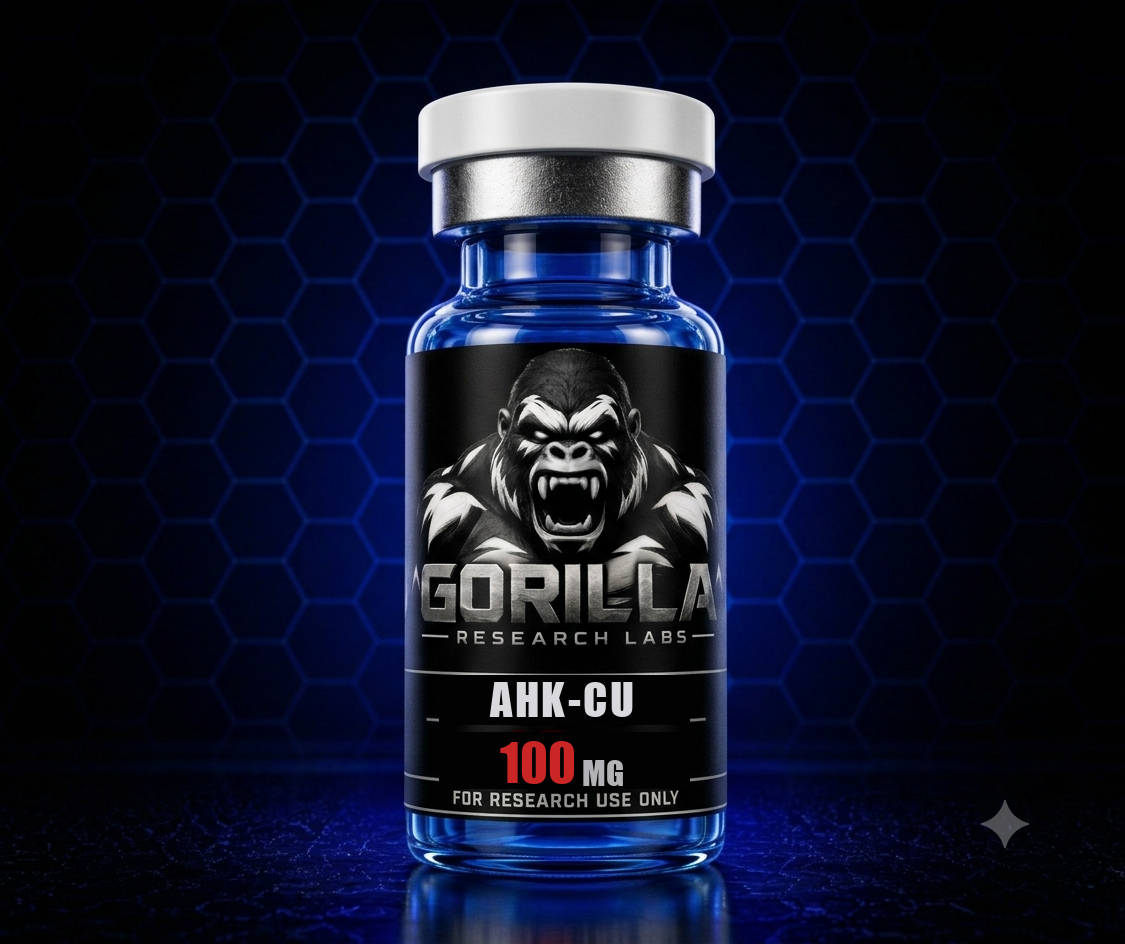
AHK-Cu (copper tripeptide) research compound, 100 mg. Ultra-pure and independently verified. For laboratory and research use only - not for human consumption.
Specifications
| Compound | AHK-Cu 100mg |
|---|---|
| Category | Peptide |
| SKU | AHKCU-100 |
| Unit size | 100 |
| Price | $60.00 |
| Availability | In stock |
| Intended use | Laboratory research use only |
Compound identity
Reference facts for the compound itself, from PubChem (NIH). They describe the molecule, not a specific batch — batch purity, where a certificate exists for the batch, is reported on it.
| CAS Registry Number | 682809-81-0 |
|---|---|
| PubChem CID | 168431292 |
AHK-Cu 100mg is also written AHK-Cu, AHK-Cu peptide, AHKCu, AHKCu peptide and AHK Cu.
Research questions about this compound
What is the primary evidence grade for AHK-Cu?
The current evidence for AHK-Cu is primarily in-vitro and mechanistic, meaning the data is derived from laboratory cell cultures rather than human clinical trials .
How does AHK-Cu interact with hair cells?
In-vitro research indicates that AHK-Cu can stimulate the proliferation of human dermal papilla cells and may influence the expression of specific growth-related proteins within those cells .
Is AHK-Cu the same as other copper peptides?
While AHK-Cu is a copper-binding peptide, its specific tripeptide sequence (Alanyl-Histidyl-Lysine) is distinct from other copper-binding peptides like GHK-Cu, and research focuses on its unique biological activity in hair follicle cell models .
What does the research suggest about AHK-Cu and hair growth?
The research suggests that AHK-Cu has the potential to influence the cellular mechanisms that support hair follicle health, specifically through the stimulation of dermal papilla cells in an in-vitro setting .
labels, lab notebooks, reorders
AHK-Cu 100mg — Reconstitution Calculator
For laboratory research use only. This tool computes the concentration of a reconstituted research solution and the volume that contains a target mass. Vial mass is a product specification, not a dose. It is not medical guidance and does not describe administration to humans or animals.
For laboratory research use only · not for human or animal use. Doses-per-bottle is pure arithmetic (vial mass ÷ target amount), not a dosing recommendation.