
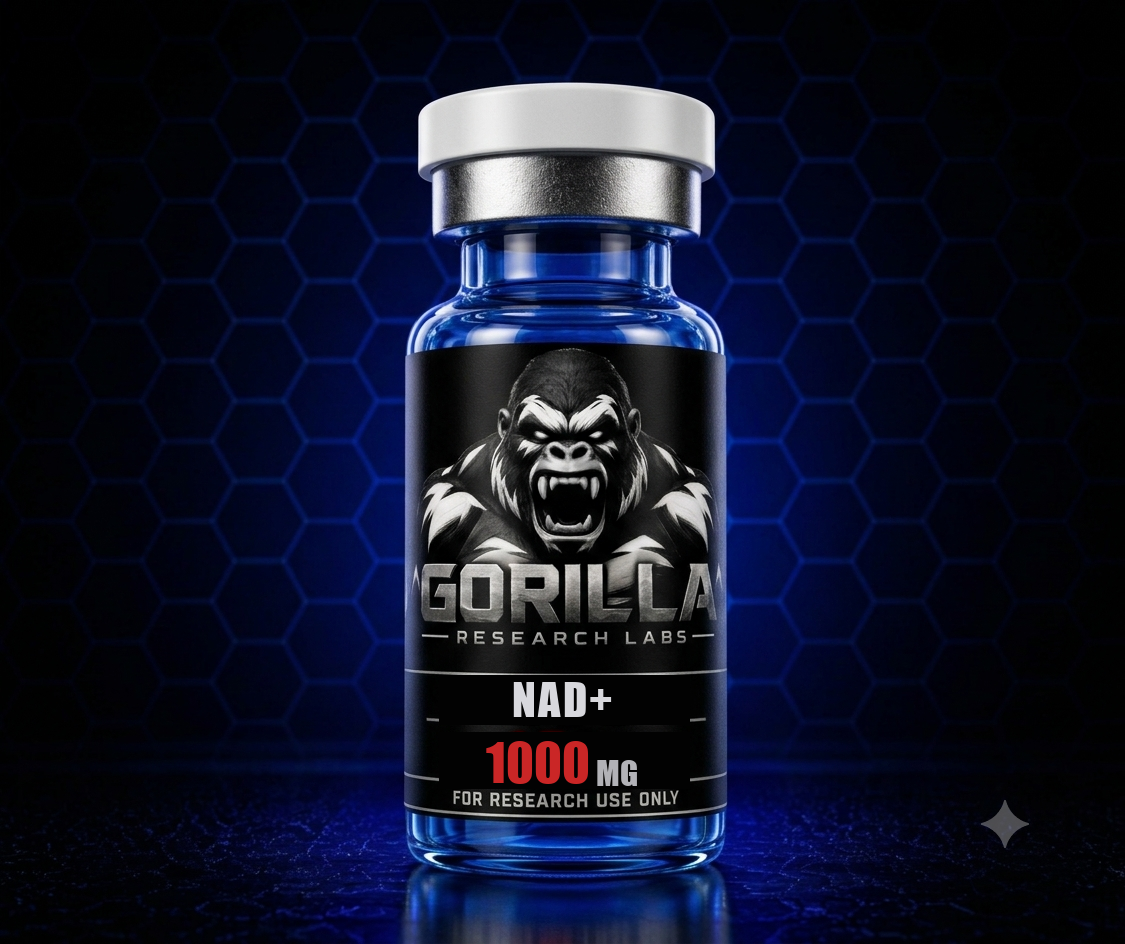
NAD+ 1000 mg Research Compound
NAD+ (Nicotinamide Adenine Dinucleotide) is a naturally occurring coenzyme found in living cells, commonly utilized in laboratory research involving cellular metabolism, mitochondrial activity, and energy production pathways. Researchers investigate NAD+ for its role in redox action, cellular signaling, and metabolic processes.
This product is intended strictly for laboratory research purposes. It is not for human consumption, therapeutic use, veterinary use, or diagnostic use.
Specifications
| Compound | NAD+ 1000mg |
|---|---|
| Category | Coenzyme |
| SKU | GRL-NAD-1000mg |
| Unit size | 1000 mg |
| Price | $80.00 |
| Availability | Out of stock |
| Intended use | Laboratory research use only |
Compound identity
Reference facts for the compound itself, from PubChem (NIH). They describe the molecule, not a specific batch — batch purity, where a certificate exists for the batch, is reported on it.
| CAS Registry Number | 53-84-9 |
|---|---|
| Molecular formula | C21H27N7O14P2 |
| Molecular weight | 663.4 g/mol |
| PubChem name | Nadide |
| PubChem CID | 5892 |
NAD+ 1000mg is also written NAD+ peptide.
Research Applications
- Cellular metabolism research
- Mitochondrial function studies
- Energy production pathways investigations
- Redox signaling research
- Laboratory-based biological studies
Product Specifications
- Contents: NAD+ (Nicotinamide Adenine Dinucleotide)
- Quantity: 1000 mg per vial
- Appearance: Lyophilized powder
- Storage: Refrigerate upon receipt
- Research use only
Research questions about this compound
What is the difference between NAD+ and nicotinamide riboside (NR)?
NAD+ is the active coenzyme itself, while NR is a precursor—a building block that the body uses to synthesize NAD+ . Research shows that both can influence systemic NAD+ levels, but they follow different metabolic pathways to achieve those results .
Is NAD+ considered safe for human use?
Retrospective pilots and randomized trials have indicated that NAD+ and its precursors are generally well-tolerated in the short term . However, "tolerability" refers to the absence of immediate negative reactions in a controlled setting, not a long-term safety guarantee for all individuals.
Does the research prove NAD+ reverses aging?
No. While mechanistic research in animal models and in-vitro studies suggests that NAD+ is involved in pathways related to cellular aging, there is no clinical evidence in humans to support the claim that NAD+ reverses the aging process .
Are the effects of NAD+ permanent?
The research indicates that NAD+ levels are dynamic and subject to homeostatic regulation . Any increase in systemic levels is temporary, as the body continuously degrades and synthesizes the coenzyme based on its metabolic needs.
labels, lab notebooks, reorders
NAD+ 1000mg — Reconstitution Calculator
For laboratory research use only. This tool computes the concentration of a reconstituted research solution and the volume that contains a target mass. Vial mass is a product specification, not a dose. It is not medical guidance and does not describe administration to humans or animals.
For laboratory research use only · not for human or animal use. Doses-per-bottle is pure arithmetic (vial mass ÷ target amount), not a dosing recommendation.